Local window cleaning guide
Living with salty glass on the Isle of Wight
A practical, no-nonsense guide to keeping your windows clear on a windy little island – written by a local window cleaner who’s out in it most days.
If you live on the Isle of Wight you’ll know that windows don’t stay clean for long. One good blow off the Solent, a bit of drizzle and a few gifts from the local seagulls and the glass can look tired again. This guide walks through how window cleaning on the Isle of Wight really works in practice – how often most people clean, what the sea air actually does to your glass and frames, and when it makes sense to get a professional in instead of balancing on a ladder yourself.
It’s written by us at Wight Cleaning Co, based in Newport and working across Ryde, Cowes, Shanklin, Ventnor and the rest of the Island. We’re not trying to dress it up – just share what we see every day as local Isle of Wight window cleaners. If you get to the end and decide you’d rather we just take it off your hands, you can always hop back to the main window cleaning service page and ask for a quote.
What you’ll find in this guide
- Quick answers before you read the full guide
- Why windows get dirty so quickly on the Isle of Wight
- Pure water window cleaning vs traditional methods
- How often to clean – homes, lets & businesses
- Different property types and the problems we see
- What affects window cleaning prices
- Doing it yourself vs hiring a window cleaner
- Getting ready for a window cleaning visit
- Choosing a reliable Isle of Wight window cleaner
- Window cleaning guide FAQs
Quick answers for Isle of Wight window cleaning
Short version: most Island homes do best with regular exterior window cleaning, especially if they are exposed to sea air, trees, traffic or holiday-let use.
Best frequency
Many homes suit a 4 to 8 weekly clean. Coastal properties, shopfronts and holiday lets often need a shorter gap.
Best method outside
Pure water cleaning is usually the safest choice for exterior glass, frames and sills because it reaches high windows from the ground.
Best method inside
Traditional mop, squeegee and microfibre work is still best for internal glass, patio doors and delicate panes.
Biggest Island issue
Salt, wind-blown rain, pollen, algae and bird mess build up quickly, especially near the coast or on sheltered upper windows.
Why windows get dirty faster on the Isle of Wight
A lot of customers say the same thing: “They looked great last week, now they’re cloudy again.” On the Island it’s usually a mix of three things working together:
- Salt in the air – sea spray and salty moisture cling to glass and frames, especially near the coast, on hills and along exposed roads.
- Prevailing winds and showers – wind-blown rain dries on the glass and leaves marks, while dust and pollen are pushed straight onto your windows.
- Birds and trees – seagulls, chimney pots, nearby trees and overhanging branches all add to the mess, particularly on roofs, skylights and conservatories.
Salt is the main troublemaker. It doesn’t just leave a haze on the glass; if you leave it to build up for months it can start to mark and stain the surface, especially on panes that never really get rinsed by heavy rain. Upper windows above conservatories and sheltered roof lanterns are classic examples.
Regular window cleaning breaks that cycle. Instead of fighting through layers of salt, algae and old detergent residue, a sensible schedule keeps on top of it and makes each clean quicker, cheaper and easier on your windows and frames.
Pure water vs traditional window cleaning
Most modern window cleaners on the Isle of Wight now use a pure water-fed pole system outside, and then fall back to traditional mop and squeegee work where it still makes sense – usually inside. They’re different tools for different jobs.
What is pure water window cleaning?
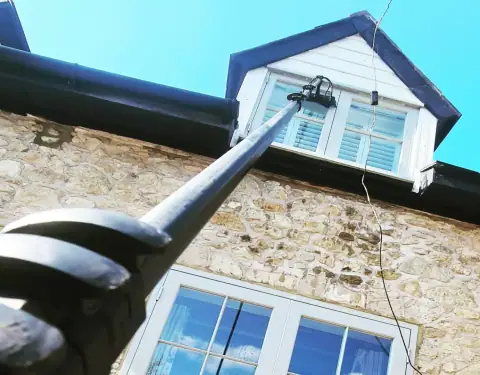
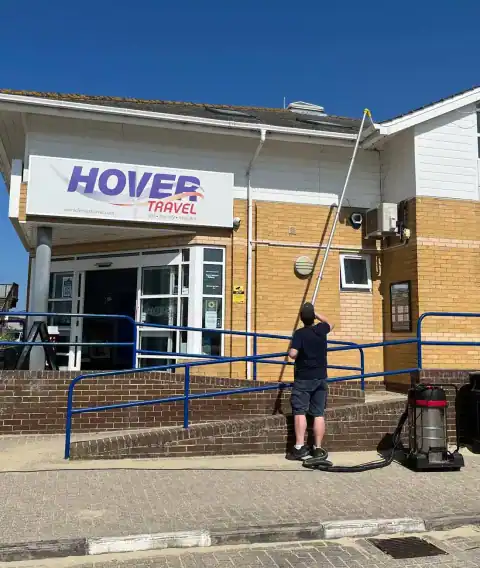
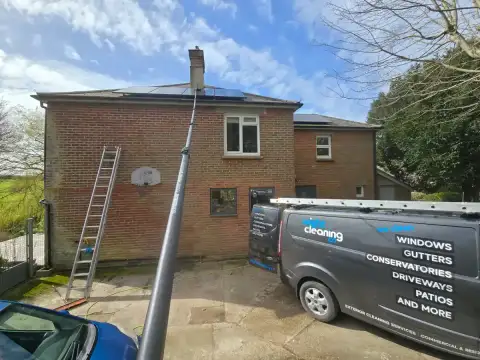
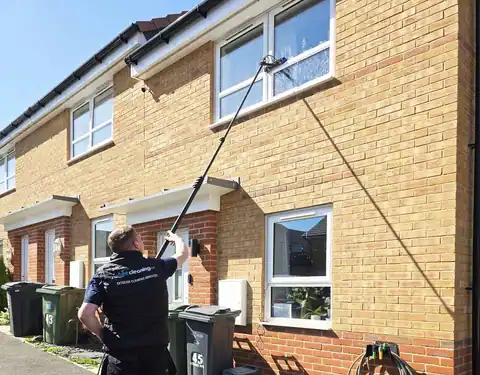
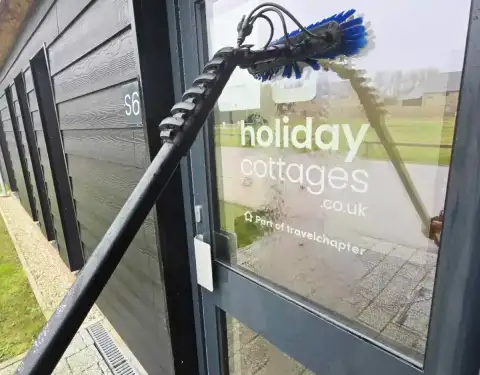
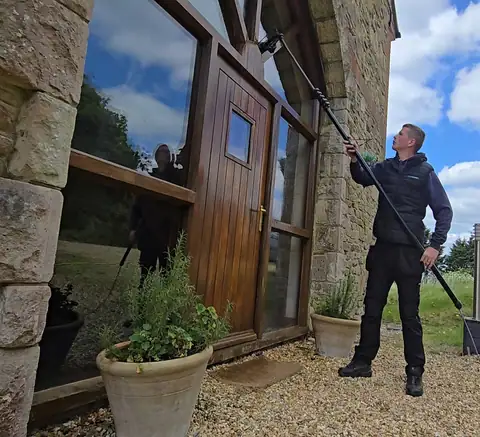
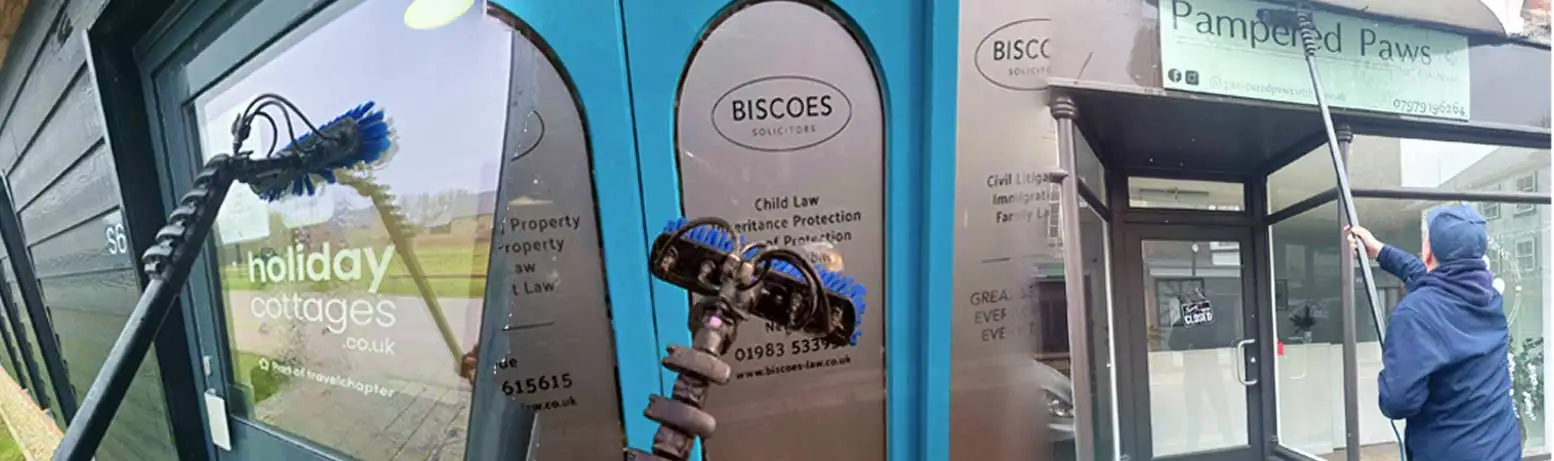
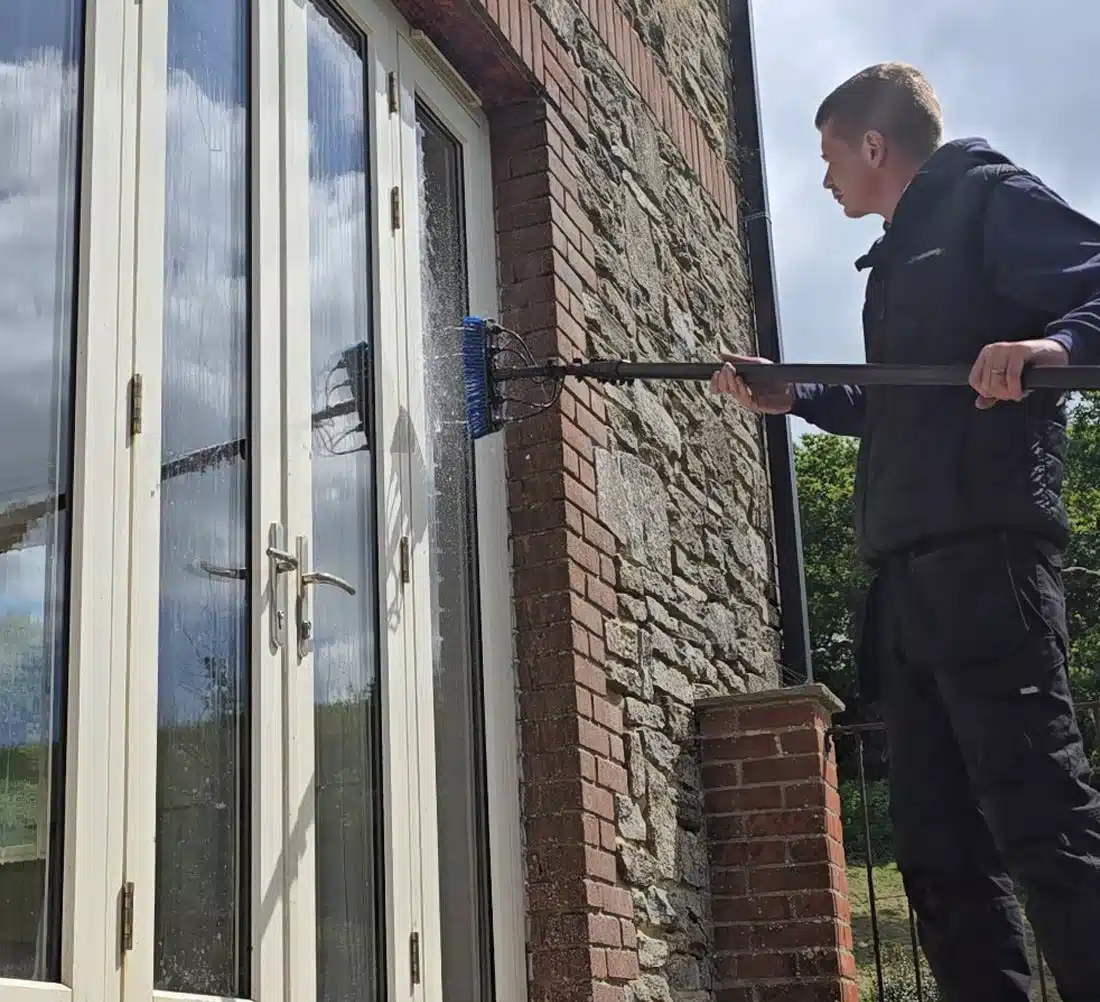
We start with normal tap water and run it through filters (reverse osmosis and de-ionisation) to strip out the dissolved minerals. That “pure” water is then pumped up a lightweight pole to a soft brush. The brush agitates the dirt on the glass and frames, and the pure water rinses everything off.
- Safely reaches high windows, skylights and awkward panes without leaning ladders over conservatories or fragile roofs.
- Cleans frames and sills at the same time as the glass, which helps keep the whole window looking fresher for longer.
- No soap is left on the glass, so once the pure water has dried you’re not left with streaks or detergent marks.
When is traditional window cleaning better?
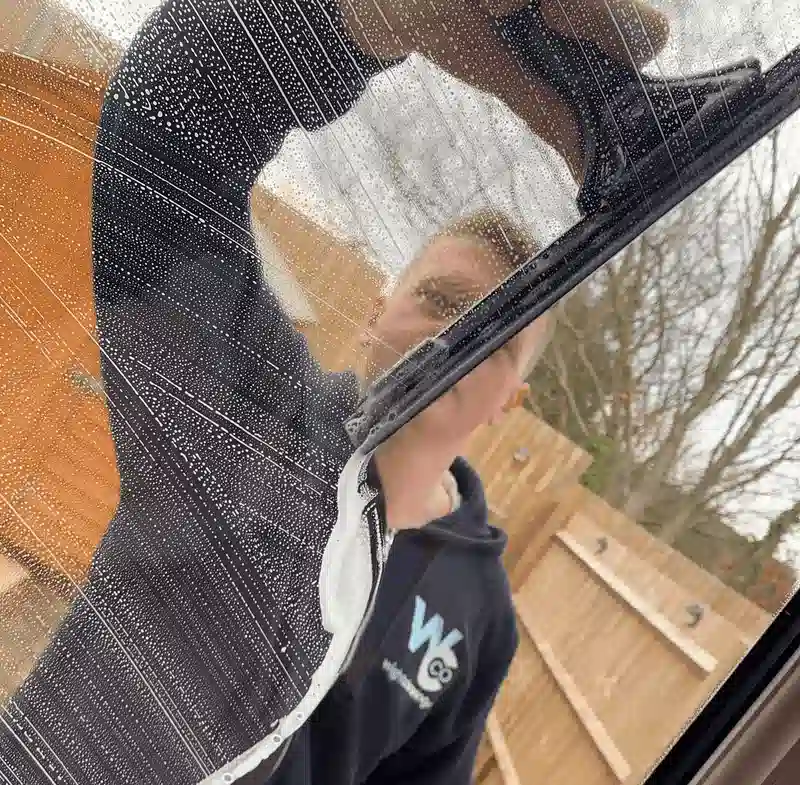
Squeegees and microfibre still have their place. Inside, or on certain small or delicate panes, we’ll often work the old-fashioned way:
- Internal windows, patio doors and balustrades where you want minimal water on floors and carpets.
- Small leaded or Georgian windows where a big brush is overkill.
- Deep cleans after building work when there may be dust, filler or light paint on the glass.
In short: outside, pure water is usually the safest and best option on the Island. Inside, a careful traditional clean still makes the most sense.
How often should you have your windows cleaned?
There isn’t a single answer that fits every property. Two houses in the same road can need very different schedules. That said, after cleaning windows right across the Isle of Wight for years, a few patterns keep coming back:
Coastal & seafront homes
Expect to clean roughly every 4 weeks. Properties in places like Sandown, Ventnor and along seafront roads pick up salt and spray very quickly, especially on the windward side.
Typical residential streets
Most homeowners settle on a 4–8 weekly window clean. That keeps the glass bright without feeling like somebody is turning up every five minutes.
Shops, salons & cafés
On main streets in Newport, Ryde or Cowes, weekly or fortnightly is normal. Shopfront windows are doing marketing for you, so they work harder and get dirty faster.
Holiday lets & Airbnbs
For coastal holiday homes and guest houses, every 2–4 weeks works well, with extra cleans before new photos, peak season or important arrivals.
Quite a few of our regular customers start on a 4-weekly or 6-weekly schedule and then tweak it after a couple of visits once we’ve seen how fast their particular windows pick up salt and grime.
If you’d like a straight answer based on your area and property type, send a quick note through our window cleaning page and we’ll recommend something realistic rather than over-selling extra visits.
Common property types and the problems we see
Houses & bungalows
The usual story is salty film on the glass, green algae on the frames and the odd awkward window above a conservatory or extension. A pole system means we can clean those high panes without walking on roofs or leaning ladders over fragile plastic.
Flats & apartments
Flats above shops and car parks in places like Ryde and Newport are often tight for access. We’ll always look at what’s genuinely safe first. Sometimes that means cleaning certain panes from inside only; sometimes poles from the back or side access do the trick.
Holiday homes & guest houses
With holiday lets, first impressions and photos matter. Large view windows, balcony glass and patio doors usually need the most attention. Along the coast – Shanklin, Ventnor, Freshwater and so on – salt and wind mean those panes benefit from a more regular clean than you might think.
Skylights, VELUX & roof lanterns
Skylights and lanterns are great for light but they sit flat enough that seagull mess, pollen and salty rain tend to sit there. We clean the outside with a soft brush and pure water, and if a VELUX or similar can be fully opened safely, we can usually sort the inside glass from within the room.
Shops, cafés & salons
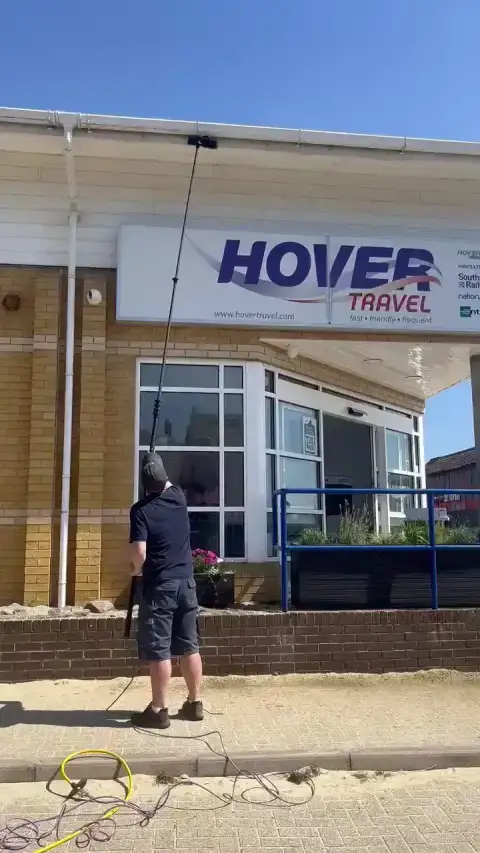
Shopfronts collect fingerprints, condensation streaks, traffic film and the odd poster mark. Clean glass makes it much easier for people to see your display and decide to step through the door, so regular commercial window cleaning quickly pays for itself.
Offices & workspaces
Offices on industrial estates might not be in the spotlight, but staff still notice when the windows are dull. A sensible schedule for exterior windows with the odd internal clean of entrances and reception areas keeps things looking professional without disrupting work.
Conservatories, garden rooms & summerhouses
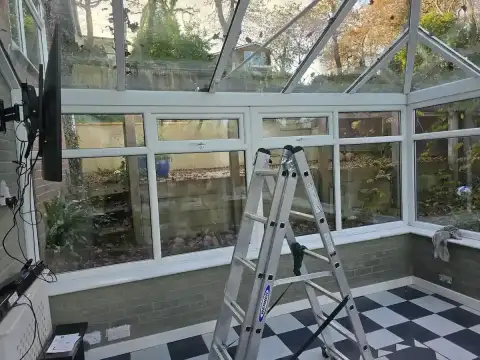
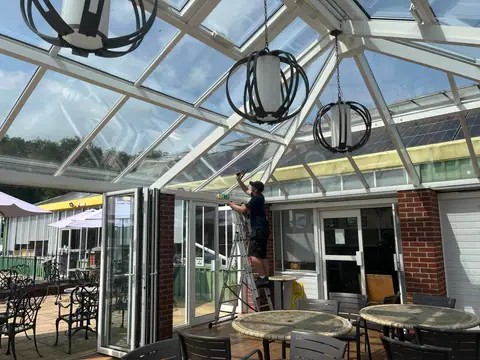
Conservatory roofs are magnets for algae and bird mess. From inside they can make the whole room feel gloomy. A periodic clean of the roof, windows and PVC frames makes a big difference and helps protect seals and panels from long-term build-up.
What affects window cleaning prices?
Most window cleaning quotes are based on time, access and risk rather than a flat number for every property. A small bungalow with easy access is very different from a three-storey townhouse, a seafront shopfront or a holiday let with roof lanterns and balcony glass.
Property size
The number of panes, doors, skylights, extensions and separate outbuildings all affect how long the clean takes.
Access
Side gates, parked cars, steep drives, locked courtyards and windows above conservatories can all change the setup time.
Frequency
A regular 4 to 8 weekly clean is usually easier to maintain than a one-off clean after months of salt and algae build-up.
Extra work
Internal glass, balcony panels, conservatory roofs, paint spots and post-building cleans need pricing separately.
The fairest way to quote is to see the property or a few clear photos first. That avoids vague "from" prices and lets us be honest about what is included, what may cost more and whether access is safe.
DIY window cleaning vs hiring a professional
There’s nothing wrong with giving the easy bits a go yourself. A bucket, a mild detergent or glass cleaner, and a basic squeegee will tidy up ground-floor windows and doors if you’ve got a spare hour.
Where we see people run into problems is when the job creeps higher or gets more awkward. A few clues that it might be time to call a professional window cleaner instead:
- Height & access: anything over a single storey, above a conservatory or over a sloping roof is better handled from the ground with proper kit.
- Time: by the time you’ve dug out ladders, moved garden furniture and cleaned up drips, the “quick clean” has eaten your afternoon.
- Consistency: regular, booked-in visits mean the windows stay presentable all year instead of only being done when you suddenly notice how bad they look.
- Finish: pure water systems and good technique cut down on smears, spotting and missed corners.
Simple rule: if you’re stretching, leaning or standing on makeshift steps to reach a window, it’s probably a job for someone with the right poles and insurance.
How to prepare for a window cleaner’s visit
You don’t need to do anything special before we arrive, but a couple of small tweaks help the clean go more smoothly and give better results:
- Move vehicles away from key windows where possible so we can reach safely with the poles.
- Close windows and roof vents if it’s breezy, so we’re not spraying water into rooms.
- Let us know if you’ve got loose render, flaking paint or very old seals so we can work around them carefully.
- If we’re cleaning inside, clear window sills and move fragile items away from the glass.
For regular rounds we’ll send a quick text the night before your window clean as a reminder, so you know roughly when we’re due.
What to look for in a reliable window cleaner
Whether you end up using us or another local business, a few quick checks go a long way when choosing an Isle of Wight window cleaner:
- Insurance: make sure they carry public liability cover (we’re insured up to £5 million for exterior cleaning).
- Reviews: look for recent feedback on Google, Facebook, Trustpilot and local recommendation groups.
- Clear pricing: you should know the price before the first clean and how often you’ll be billed.
- Communication: things like reminder texts, clear routes and a straightforward way to rearrange if you’re away.
- Respect for your property: careful use of ladders and poles, shutting gates behind them and not leaving muddy footprints everywhere.
If you’d like a no-obligation quote from us, you can see exactly what we offer on our window cleaning service page, or just drop us a message.
Window cleaning guide FAQs
Is pure water window cleaning meant to dry naturally?
Yes. Pure water is designed to be left to dry after the glass, frames and sills have been brushed and rinsed. Because the minerals have been filtered out, it should dry clear without detergent residue.
Why can windows look spotty after a first pure water clean?
First cleans can pull old detergent, trapped dirt and frame residue out from seals and vents. Once the frames have had a proper rinse and regular cleans keep the build-up down, the finish normally improves.
Do frames and sills need cleaning every time?
For exterior cleans, yes, they should normally be included. Dirty frames can run back onto clean glass, so brushing and rinsing the surrounding uPVC or painted frames helps the glass stay clearer.
Can window cleaning be done in light rain?
Usually, yes. Light rain is not the problem; dirty rain drying onto already dirty glass is. Heavy rain, high winds or unsafe conditions are different and may mean rearranging.
Want us to take this off your hands?
If your windows are taking a hammering from sea air, birds and salty rain, we’re happy to help. We provide reliable, regular window cleaning across the Isle of Wight — no ladders, no streaks, no fuss.