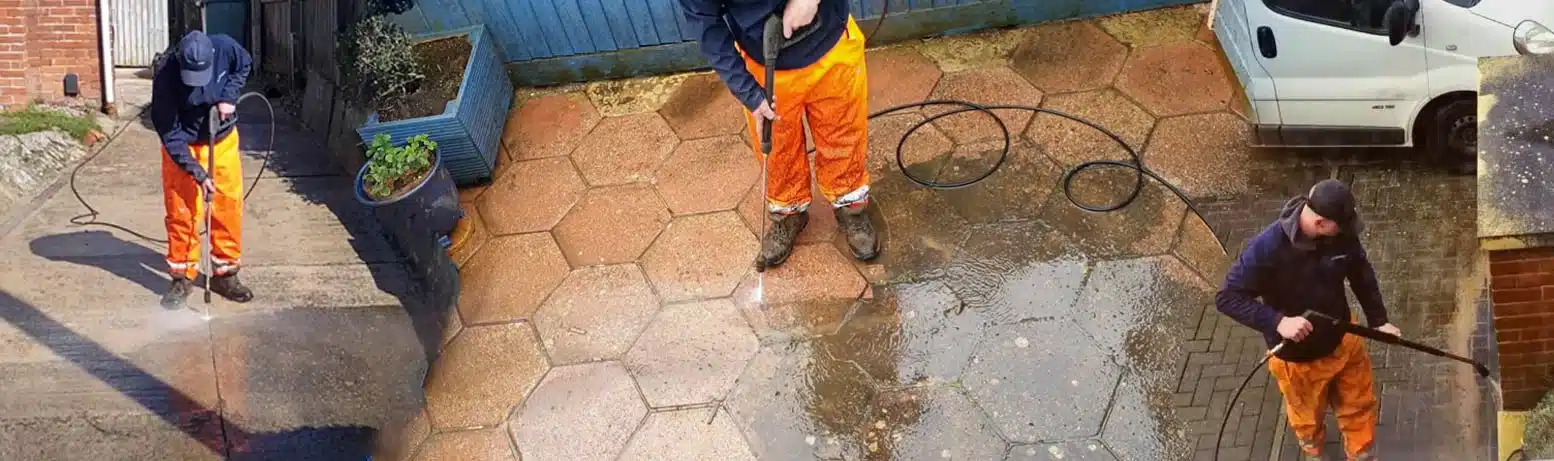
Local pressure washing guide
Slippery patio? Green drive? Welcome to Island life.
A straightforward guide to pressure washing on the Isle of Wight, written by someone who spends a suspicious amount of time staring at algae.
If you’re on the Isle of Wight, you’ve probably noticed outdoor surfaces don’t stay “clean” for long. Damp air, shaded corners, coastal weather, and a bit of leaf muck turns patios and drives into a green ice rink faster than you’d think.
This guide explains how pressure washing (jet washing) works in real life: what’s safe to clean, what needs a gentler approach, the difference between a quick rinse and a proper deep clean, and when it’s worth getting a professional in (especially for block paving, stains and tricky surfaces).
It’s written by us at Wight Cleaning Co, based in Newport and working across Ryde, Cowes, Shanklin, Ventnor and everywhere in between. If you get to the end and decide you’d rather not spend your Saturday covered in slurry, head back to our main pressure washing service page and request a quote.
What you’ll find in this guide
- Why patios and drives go green so fast on the Isle of Wight
- When to pressure wash (and when to leave it alone)
- Surface-by-surface: what’s safe (patios, block paving, tarmac, decking)
- Pressure washing vs softwashing (and why both matter)
- Oil stains, tyre marks and black spot: what actually works
- Block paving resanding: when, why, and what to expect
- How often to clean patios & driveways (homes, lets & businesses)
- DIY vs professional pressure washing (risk, results, cost)
Why patios and driveways go green so quickly on the Isle of Wight
Most people think it’s “just dirt”. On the Island it’s usually a cocktail:
- Damp coastal air keeps surfaces wet for longer, especially in shade.
- Algae film forms fast on stone, concrete and paving, then gets slippery.
- Moss and leaf debris breaks down into a gritty compost that holds moisture.
- North-facing areas stay cooler and don’t dry out properly.
Once the “green layer” starts, it holds moisture, which encourages more growth. That’s why a proper clean is often about both removing and treating, not just blasting the top.
When to pressure wash (and when to leave it alone)
You can pressure wash year-round, but the timing can affect results:
- Spring: ideal for a reset after winter grime and before outdoor season.
- Summer: surfaces dry faster and sand cures well on block paving.
- Autumn: good for clearing algae before winter, but leaf fall can undo it quickly.
- Winter: still possible on milder days, but drying time is slower and frost risk matters.
The main times we recommend caution are:
- Very loose pointing / grouting (it may blow out).
- Flaking coatings / paint (pressure washing can lift it).
- Soft sandstone and fragile surfaces (needs the right approach, not max pressure).
Surface-by-surface: what’s safe to pressure wash?
Concrete and paving slabs (patios, paths)
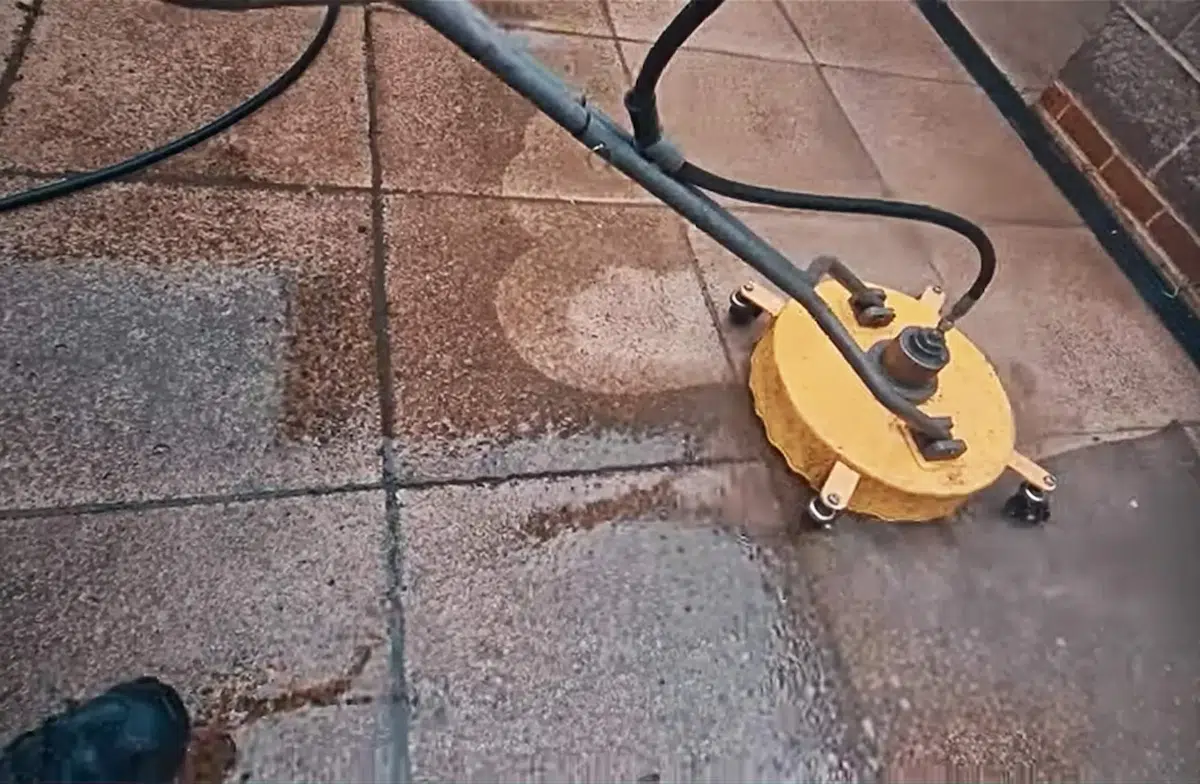
Usually very suitable for pressure washing. The key is using the right technique to avoid “striping” lines and to lift algae evenly. A surface cleaner (rotary head) gives a much more consistent finish.
Block paving
Pressure washing works brilliantly, but it almost always removes jointing sand. That’s normal. The correct finish is to let it dry properly, then re-sand the joints. Without resanding, blocks can shift and weeds return quicker.
Tarmac / asphalt
Can be cleaned, but it needs care. Too much pressure can mark or loosen the top layer. We typically use lower pressure and a controlled rinse, plus treatment for algae build-up.
Decking (wood or composite)
Wood decking needs a lower-pressure approach to avoid furrowing the grain. Composite is usually easier, but still benefits from careful technique to prevent patchiness.
Resin & imprinted concrete
Often safe if cleaned correctly, but we avoid aggressive blasting. These can respond well to a controlled clean plus treatment, and in some cases a re-seal is recommended depending on condition.
Pressure washing vs softwashing (and why both matter)
Think of it like this: pressure washing removes the build-up you can see, and softwashing/treatments deal with what’s trying to grow back.
Professional pressure washing
This is the deep clean: lifting grime, algae film, moss and built-up dirt using professional kit. For big areas, a surface cleaner gives an even finish and keeps mess down.
- Best for: patios, concrete, paths, many driveway surfaces.
- Good at: removing the “top layer” of slippery growth and grime.
- Watch-outs: loose pointing, fragile stone, and block paving joints (needs resanding).
Softwashing / treatments
Treatments help with algae regrowth, black spot lichen, and shaded areas that turn green quickly. In some cases we’ll apply a treatment after cleaning to help keep it cleaner for longer.
- Best for: maintenance, shaded areas, problem spots, some delicate surfaces.
- Good at: slowing regrowth and brightening “stained” surfaces over time.
- Watch-outs: needs correct application and realistic expectations (not everything disappears instantly).
Oil stains, tyre marks and black spot: what actually works?
Some stains lift easily. Others need a bit of realism (and sometimes repeat visits).
Oil stains
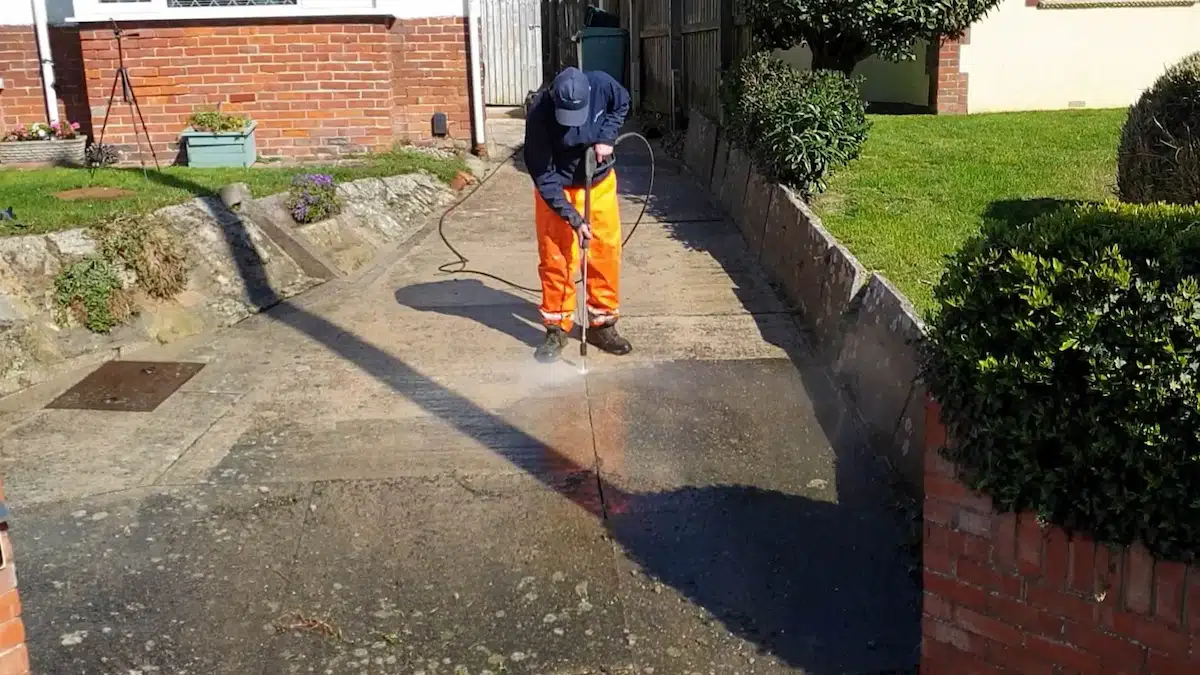
Fresh oil responds best. Older oil can soak into porous surfaces, so it may improve rather than fully vanish. A good clean combined with the right degreaser/treatment usually gives the biggest change.
Tyre marks and ground-in traffic grime
Common on driveways and shared entrances. A professional clean usually lifts this well, especially on concrete and block paving.
Black spot lichen
The tiny black dots you see on patios are often lichen. It can be stubborn and sometimes needs a specific approach. Pressure washing helps, but a treatment can improve results further over time.
Block paving resanding: when, why, and what to expect
If you pressure wash block paving properly, the sand between the blocks gets removed. That’s normal. Resanding is what locks everything back together.
- Why it matters: stabilises blocks, helps prevent shifting, and reduces weed growth.
- When it happens: after cleaning, once the paving is fully dry.
- What we use: kiln-dried sand (standard approach for most domestic block paving).
If someone cleans block paving and doesn’t mention resanding, it’s usually a sign it’s been a quick “rinse and run” rather than a proper job.
How often should you pressure wash patios & driveways?
It depends on shade, trees, foot traffic and how quickly your surface goes green. Across the Island, these are the patterns we see most:
Shaded patios / north-facing areas
Every 12–18 months is common. These areas stay damp and grow faster.
Driveways with regular traffic
Every 1–2 years depending on surface type and staining.
Holiday lets & Airbnbs
Annually (spring) is popular for kerb appeal, photos and guest safety.
Shops & commercial entrances
Annual or bi-annual to keep entrances clean and reduce slip risk.
If you’re unsure, a simple giveaway is slip risk: once it’s slippery, it’s due.
Want a recommendation for your place? Head to our pressure washing page and we’ll suggest something realistic.
DIY pressure washing vs hiring a professional
DIY pressure washers can be fine for small jobs, but a few common problems crop up:
- Striping: uneven lines where the jet has been too close or moved inconsistently.
- Damage: blasted pointing, damaged grout, furrowed decking, etched soft stone.
- Mess: dirty run-off everywhere, splatter on walls, windows, doors and furniture.
- Block paving: joints washed out, then not resanded, which leads to shifting and weeds.
Professional setups usually mean more consistent pressure, better surface cleaning tools, and the right process for each surface. It’s often quicker too.
Ready to get it looking fresh again?
Patios, driveways, decking, walls and more. Reliable pressure washing across the Isle of Wight, with the right method for the right surface.