Local gutter clearance guide
Got a garden growing in your gutters?
A straightforward guide to keeping your gutters clear on the Isle of Wight – written by someone who spends half their week staring up at rooflines.
If you live on the Island you’ll know gutters don’t stay clear for long. A couple of storms off the Solent, a few weeks of autumn leaves and suddenly you’ve got moss, weeds and a mini-ecosystem up there. This guide covers how gutter clearance on the Isle of Wight really works in practice – why blockages happen so quickly here, the warning signs to watch for, and when it’s time to get a professional in rather than risking the ladder yourself.
It’s written by us at Wight Cleaning Co, based in Newport and working across Ryde, Cowes, Shanklin, Ventnor and everywhere in between. We’re not trying to over-complicate it – just sharing what we see every day as local gutter clearance specialists. If you get to the end and decide you’d rather we handle it, you can head back to the main gutter clearance service page and request a quote.
What you’ll find in this guide
- Why gutters block so quickly on the Isle of Wight
- Warning signs your gutters need clearing
- High-reach vacuum vs manual gutter clearance
- How often to clear gutters – homes, lets & businesses
- Different property types and common problems
- DIY gutter clearing vs hiring a professional
- Preparing for a gutter clearance visit
- Choosing a reliable gutter clearance service
Why gutters block faster on the Isle of Wight
Customers often say, “They were clear last year – how are they full again already?” On the Island it’s usually a mix of a few things working together:
- Trees and leaves – oak, sycamore and beech drop heavy loads in autumn, and prevailing winds push them straight into gutters.
- Moss and algae – damp coastal air and shaded roof slopes encourage moss growth, which breaks off and builds up in gutters.
- Roof grit and debris – older concrete tiles shed grit over time, mixing with leaves to form a heavy sludge.
- Birds and wildlife – seagulls drop shells, jackdaws bring twigs, and the odd ball can end up wedged in a hopper.
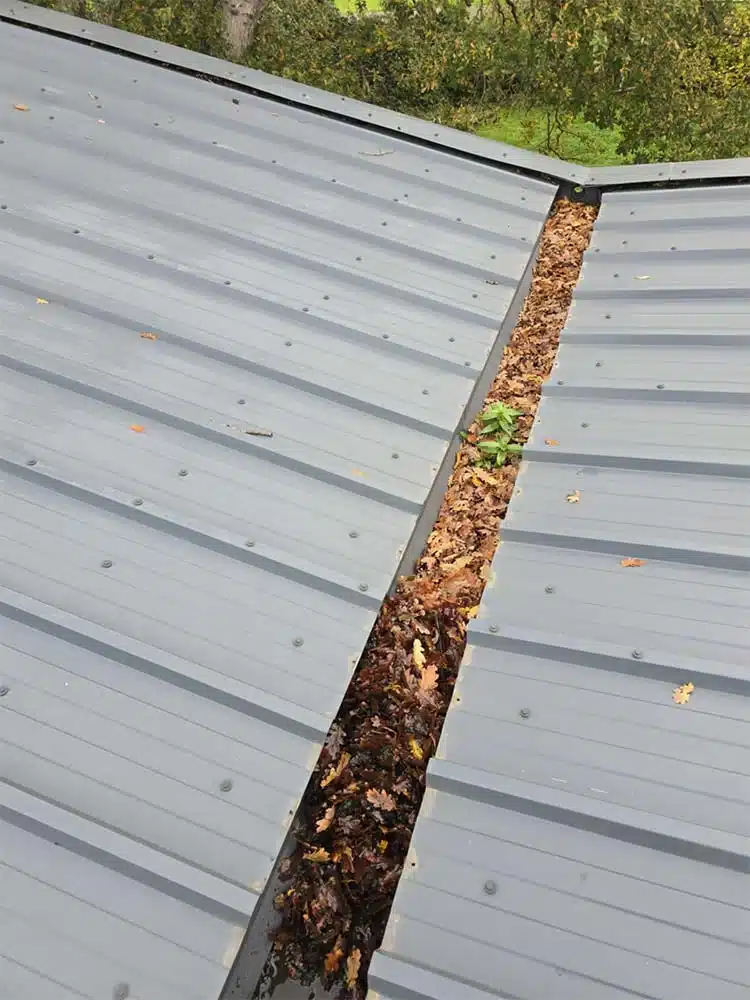
Once a gutter is even partly blocked, water sits longer, encouraging more moss and weeds to take root. Left for a couple of seasons it can turn into a proper hanging garden and start overflowing onto walls or leaking at joints.
Regular clearance breaks that cycle, keeps water flowing freely and helps protect your fascia, soffits and walls from damp.
Warning signs your gutters need attention
You don’t always need to climb a ladder to spot a problem. Keep an eye out for:
- Water overflowing during rain (even light showers).
- Plants or weeds growing out of the gutter.
- Damp patches or staining on external walls.
- Sagging gutters or brackets pulling away.
- Drips at joints or water running behind the gutter line.
- Moss or debris you can see from the ground.
Catching issues early is usually cheaper than waiting until you’ve got damp, rotten fascia boards or water getting where it shouldn’t.
High-reach vacuum vs manual gutter clearance
Most professional gutter clearance services on the Isle of Wight use a mix of high-reach vacuum systems and traditional ladder/hand clearing. They’re different tools for different jobs.
High-reach gutter vacuum
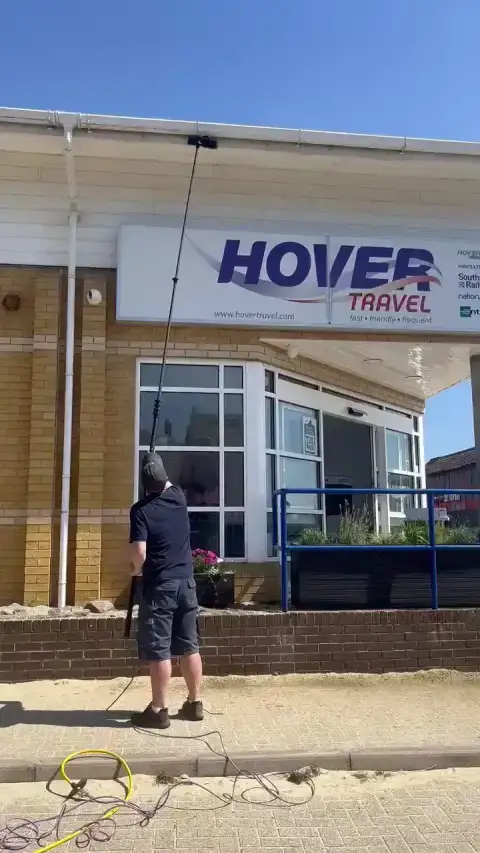
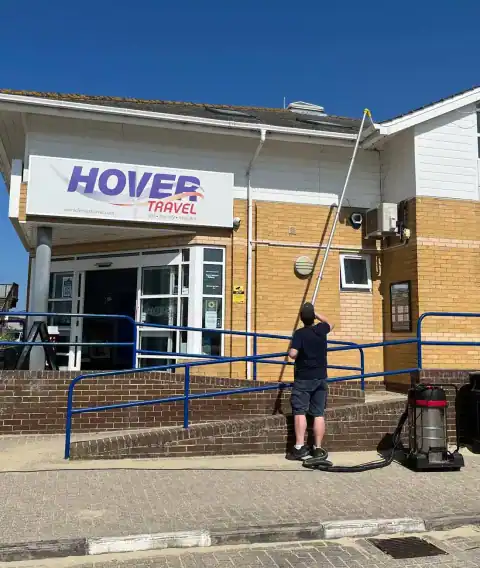
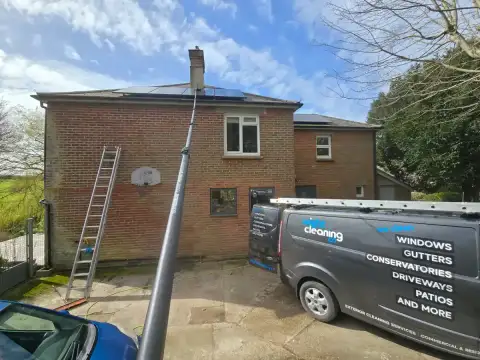
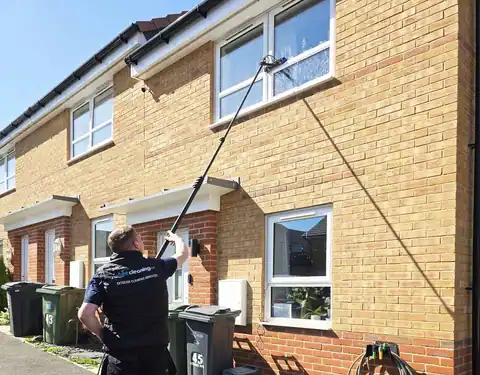
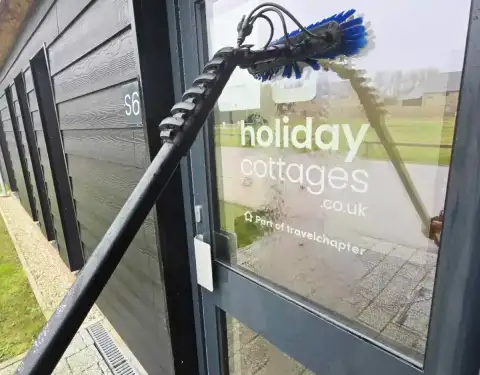
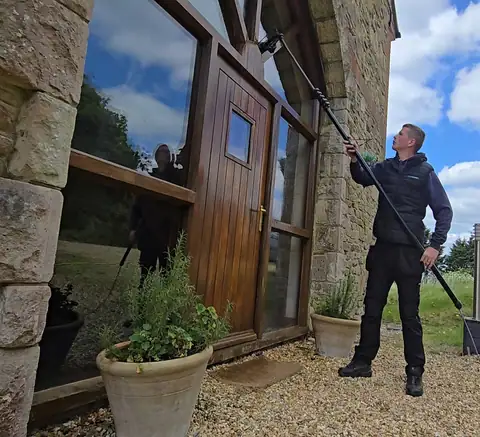
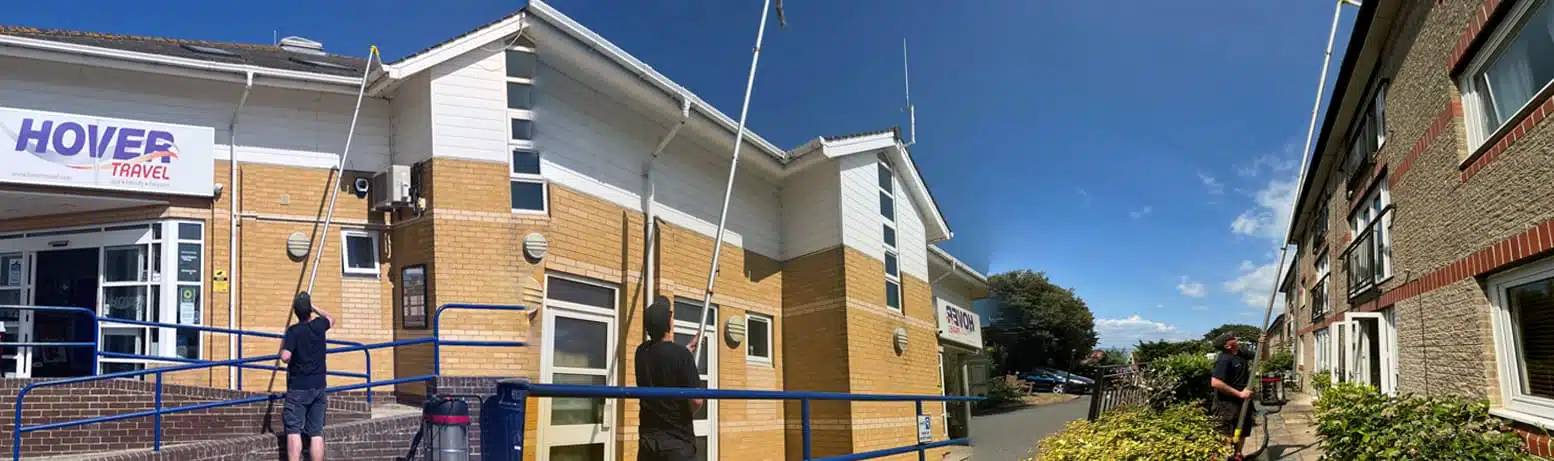
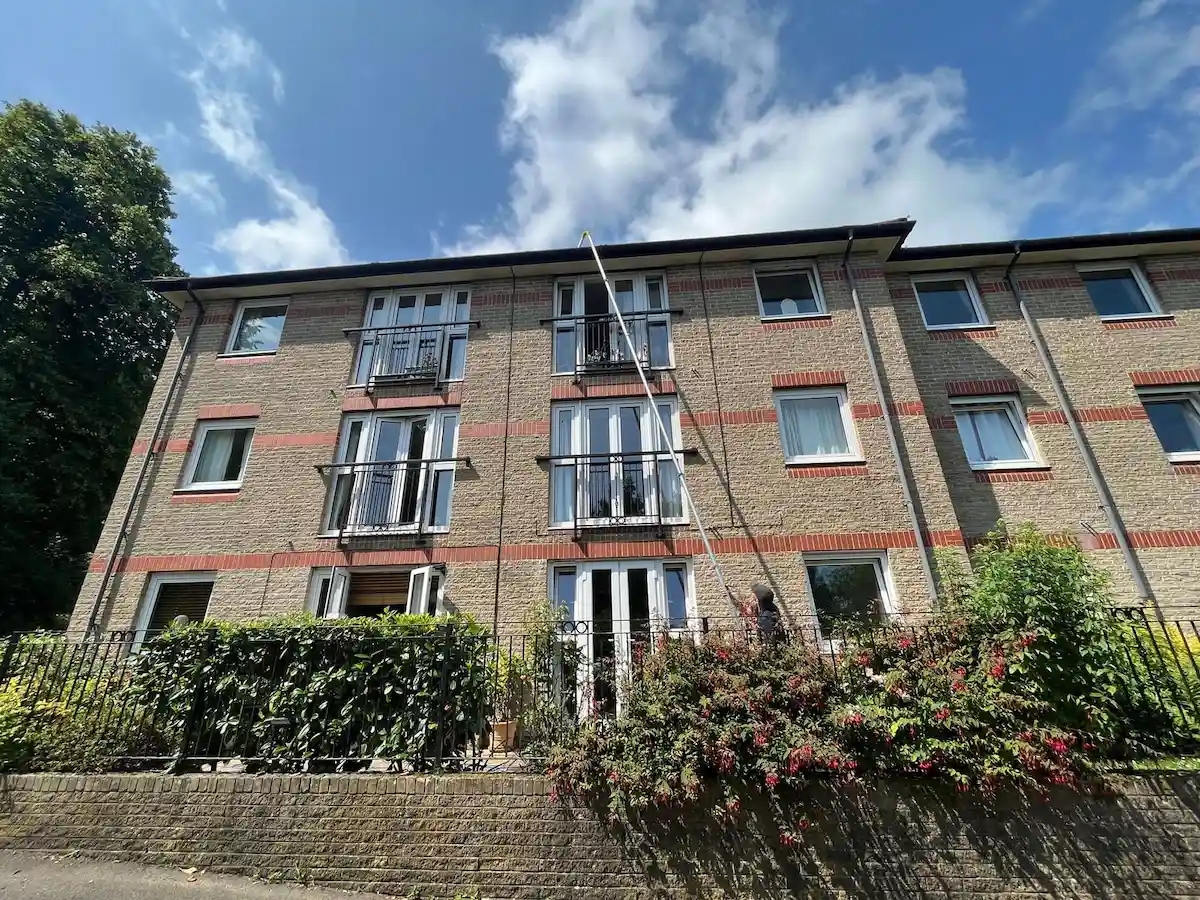
A powerful vacuum stays on the ground while lightweight carbon-fibre poles reach up to around 12–15 metres. A camera on the end lets us see inside the gutter as we work.
- Safe: no ladders needed for most two/three-storey homes.
- Fast: ideal for long runs and straight gutters.
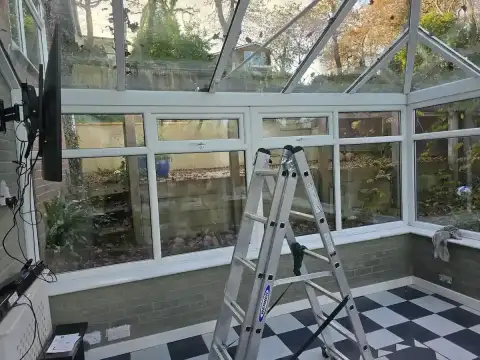
- Perfect above conservatories: no leaning ladders over fragile roofs.
- Cleaner: debris is captured into the vacuum bag with minimal mess below.
Manual clearing with ladders
We still use ladders for awkward corners, cast-iron gutters, tight spaces, or very heavy blockages where a hands-on approach is best.
- Lets us deal with tricky elbows and hoppers when needed.
- Useful for checking downpipe flow properly and spotting issues.
- We can often identify and report damage (loose brackets, cracked joints, slipped seals).
In practice, we often use both methods on the same job: vacuum for the bulk, ladders for the detail work.
How often should you clear your gutters?
There’s no one-size-fits-all answer, but after years of jobs across the Island, a few patterns come up again and again:
Properties near trees
Every 6–12 months. Heavy leaf drop means twice-yearly is common (autumn clear, spring check).
Coastal & exposed homes
Annually at minimum. Damp air speeds up moss growth and debris builds up faster.
Holiday lets & Airbnbs
Twice a year works well (spring and autumn), plus a check before peak season or new listing photos.
Shops & commercial
Annual or bi-annual. Helps prevent leaks into stock areas and keeps the building looking cared for.
Many customers settle on an annual autumn clear after leaf fall, with a quick spring check if the property is surrounded by trees.
If you’d like a recommendation for your property, drop us a message via our gutter clearance page and we’ll suggest something realistic.
Common property types and typical problems
Older cottages & Victorian/Edwardian homes
Cast-iron gutters and tight rooflines are common on older Island properties. They’re prone to rust, moss build-up and heavy leaf loads. These often benefit from careful, hands-on clearing rather than a quick skim.
Modern estates & new builds
Plastic gutters above conservatories are a classic. Long runs can fill quickly with roof grit and leaves, and conservatory roofs make ladder access awkward. Vacuum clearance from the ground is usually ideal.
Holiday homes & guest houses
Exposed coastal locations often mean faster moss growth and more wind-blown debris. Keeping gutters clear helps avoid damp issues that can become bigger problems during busy changeovers.
Flat roofs, roof lanterns & hidden valleys
Debris can collect in hidden areas behind parapets and in roof valleys. These are easy to miss until water starts going the wrong way. A vacuum system with camera checks is brilliant for spotting what’s going on up there.
Commercial premises & shops
High-level gutters and shared downpipes can cause issues that affect multiple units. Regular clearance helps prevent leaks into stock rooms, customer areas, and entrances.
DIY gutter clearing vs hiring a professional
Clearing easy, low gutters yourself can be doable with a stable ladder and the right approach. The problems start when:
- Height & access: anything over one storey, above a conservatory, or on awkward rooflines becomes a safety risk.
- Compacted debris: heavy moss and sludge needs proper kit to remove cleanly and safely.
- Downpipes: blockages often sit in bends, hoppers and elbows and need checking properly.
- Time: “Just a quick clear” turns into a half-day job once you’ve moved things around and cleaned up.
Professional gutter clearance is safer, faster and usually more thorough, especially on typical Island properties with height, conservatories, or lots of moss.
How to prepare for a gutter clearance visit
You don’t need to do anything special before we arrive, but a couple of small things help us work quickly and safely:
- Clear access below gutters where possible (move plant pots, cars and garden furniture).
- Let us know about fragile roof tiles, loose render, or any areas you’re worried about.
- Unlock side gates if we need rear access.
- Tell us about any known leaks or problem sections so we can check them properly.
For regular customers we’ll send a quick text the evening before as a reminder, so you know roughly when we’re due.
What to look for in a reliable gutter clearance service
Whether you use us or another local company, a few quick checks go a long way:
- Insurance: make sure they carry public liability cover (we’re insured up to £5 million for exterior cleaning).
- Reviews: look for recent feedback on Google, Facebook, Trustpilot and local recommendation groups.
- Clear pricing: you should know the price before the job starts and what’s included.
- Evidence: before-and-after photos, camera checks, or at least a clear explanation of what was found.
- Proper checks: a willingness to check downpipe flow and report issues rather than “vacuum and go”.
Ready for us to sort yours? Head to our gutter clearance service page for a quote.
Ready to get those gutters flowing again?
If your gutters are overflowing, sprouting plants or just due a clear-out, we’re here to help. Reliable gutter clearance across the Isle of Wight – no mess, no ladders for you to worry about.